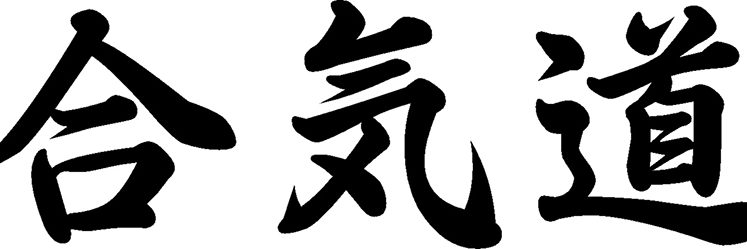
Twenty years ago this month I sat down with Sensei Robert MacEwen for an interview in the back of the dojo at 65 North Street in Middletown. The reason for the interview was pretty straightforward: an aikido magazine that I subscribed to had had many letters to the editor asking about the art of Nihon Goshin Aikido and how it related to hombu aikido. Some of the letters specifically mentioned Mr. MacEwen. It was clear to me that the aikido world at large wanted to know more about our art and our sensei, so why not give it to them? I was certain that the magazine would jump at the chance to publish the article.
Boy was I wrong.
After mailing the interview without first submitting a query letter (amateur!), I was politely told by the editor that while she respected our art and our sensei, she wanted their magazine to focus solely on aikido derived directly from O-Sensei.
Things have changed over the years. The magazine has since ceased its print edition. The dojo is at a new location in Middletown and has become the world headquarters. Sensei MacEwen is now Shihan MacEwen (5th dan), the US Director of the Nihon Goshin Aikido Association with 46 years of experience in our art.
But what hasn’t changed is Shihan’s passion and dedication to keeping Nihon Goshin Aikido true to its roots. I hope that you agree when you read his words from 1999.
(The following article is presented as it would have appeared in the magazine; therefore, Mr. MacEwen’s title, rank and number of years training in NGA are stated as what they were at the time to keep everything consistent.)
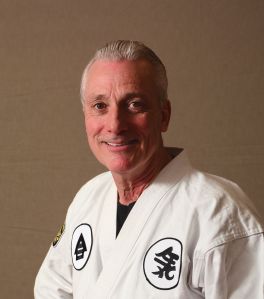
Robert MacEwen, Sensei (3rd dan), has been practicing Nihon Goshin Aikido for 26 years and is currently the third highest-ranking practitioner of the art in the world.
Could you give some background history on Shodo Morita, such as who he trained with and how he came to mold Nihon Goshin Aikido (NGA)?
Shodo Morita was from Hokkaido, Japan. His main instructor was Yoshiro Kitaro Sensei. I know he also had some training with Sokaku Takeda.
He trained in Judo, Karate, Jujitsu, Bo-Jitsu, Yawara, and other less known but equally important martial arts, but he always felt that no one system was complete. He took what he felt was the best out of all the different arts and created Nihon Goshin Aikido.
Morihei Ueshiba would have been alive when Mr. Bowe trained with Morita in Hokkaido in the late 1950’s and early ‘60’s. Did Mr. Bowe ever mention any relationship between Morita and Ueshiba?
From what I understand, Ueshiba and Morita knew of each other and may have trained together a few times in Daito-Ryu Aikijujitsu. Bowe, to my knowledge, never trained with Ueshiba. Morita was in Chitose, Hokkaido, and Ueshiba was in Tokyo. You have to understand that Hokkaido to Tokyo was probably like going from Seattle to Los Angeles.
How did Mr. Bowe begin his NGA training?
Mr. Bowe was stationed at the Chitose Military Base. He would leave the base to train with Morita. He cleaned the dojo for lessons and had to pay a little. Whenever he was not on the base, he was at the dojo. There were a few other Americans there too.
Under what circumstances did Mr. Bowe bring NGA to the US?
Mr. Bowe had already received a black belt in Jujitsu from the school he trained at in Manhattan before he left to join the military at the age of 19. When Mr. Bowe was finished with his tour in Japan, he came back with a black belt in Nihon Goshin. Instead of going back to the Jujitsu school in Manhattan, he had gotten involved with a Karate school in Guttenburg, New Jersey, that wanted him to teach Aikido two nights a week. If I’m not mistaken, he either inherited or bought that school from the Karate people who had owned it. That would be 1963 when he opened the Guttenburg dojo as a Nihon Goshin school.
How long did NGA survive in Japan after 1963?
Until 1976, approximately. The last correspondence Mr. Bowe had with Master Morita’s successor, Tominosuku Nara, was when he got his shihan certificate, mailed from Chitose. I think that was the last connection we had with Japan.
Could you explain the importance of Morita’s belt in the Black Belt Ceremony and how that’s changed over the years?
The belt that is used in the black belt ceremony is the belt given to Mr. Bowe by Shodo Morita. He was given that belt because he was the first American promoted to the rank of shodan in Japan in Nihon Goshin. Each person promoted to shodan in the association wears that belt during their Black Belt Ceremony. I did it up to a certain point, but what I’ve done is passed on the tradition by promoting my black belts with my own black belt given to me by my first instructor, Sensei John Lehman. It’s not that I don’t want to use Shodo Morita’s belt, it’s just an issue of convenience.
Did Mr. Bowe make NGA more American? Was the belt system changed at all from Japan?
I would have to say that he did somewhat Americanize it because when he trained with Master Morita there was no ranking system. I think it was white, brown and then black belt. He added yellow, blue, green and purple and organized it as far as what techniques you would learn at each rank. He did it for America and the American way of thinking.
Was the junior division a similar creation, to appeal to younger students?
It is my understanding that the junior division was created by Mr. Bowe. He basically put that together to appeal to younger students. I used to only take eight-year-olds, now I take them at five. In my past 25 years in teaching Aikido, I’ve found that kids mature much faster than they did in the ‘70’s and early ‘80’s.
Most traditional Aikido uses Japanese terms for techniques, whereas we use English terms. What are the reasons for using English instead of Japanese?
It is great learning the Japanese terms for the techniques, and traditional hombu Aikido has always taught in Japanese as part of their curriculum. I feel that Aikido is difficult enough, and it’s easier teaching it in English to people who speak English. Learning the Japanese vocabulary is a benefit to the student as long as it doesn’t interfere with them understanding the philosophies and focus of Aikido.
Was there as much support among martial artists then as there is today?
There was much more support than there is today among martial artists. When I began training with Mr. Bowe in 1974, we would go to shows and there was camaraderie and support, though some jealousy about who had more students. Mr. Bowe and his friends, such as Gary Alexander and Ronald Duncan, were respectful of each other as serious martial artists and wouldn’t tolerate “garbage” martial artists. They respected each other for what they were doing because they were doing it right.
How did you begin your training and did it help you growing up?
I started dabbling in 1969 in Jujitsu at 8 years old, Aikido at 12. I was a very insecure individual growing up, not about appearance, but about my physical size. I didn’t think I could physically handle myself. If there was a bully out there he would find me. The training kept me focused on building my self-esteem and confidence. I didn’t feel the need to confront anybody. I never physically fought back. I would just take it and walk on.
From 8th grade to 10th grade there was one individual at school who would consistently knock my books out of my arms as I would walk down the hall. If we shared the same class, he would knock the books off my desk to get a chuckle from the other kids. I never confronted him because he was bigger. Even though I was training in the martial arts nobody knew about it except for a few close friends. I never did anything to him.
I remember one time being in a supermarket and he was standing in front of me in line. He didn’t recognize me because I had a mustache and this was 10-15 years later. But I remembered him like we were still in high school and I expected him to throw my groceries out of my cart. But when I saw that I was buying filet mignon and lobster tail with cash and he was using food stamps to buy his groceries, I realized that this was my payback for all those years I spent being humble.
How did you come to teach in Middletown, New York?
I happen to be teaching in the same building where I started. I began teaching above a jewelry and china store, but with all our bouncing around upstairs we were knocking the china off the walls. So the owner moved me into this building where I’ve taught ever since.
Explain the motto “where self-defense is a science, not a side-line.” Who first said it and what does it mean to us?
Mr. Bowe was the one who thought of that saying. I’m a firm believer in that because Nihon Goshin Aikido is a style that gives you the science behind why you are doing something, and not saying, “do it because we told you to do it.” We have a reason, and if we have no reason then we have no reason teaching.
You have studied and hold black belt rank in several other martial arts (Jujitsu, Karate, Aiki-Jujitsu, Ninjutsu). Have you incorporated any of this in your NGA technique or in teaching?
Jujitsu was my background in the first place. I studied Isshin Ryu Karate and never attained a rank. But over the years John DeBlasio was my Karate instructor as much as I was his Aikido instructor, and we have trained enough together that we could rank each other black belt. My Ninjutsu training definitely helped me with my handgun disarming techniques and understanding them better. I have incorporated all of this in my teaching, but students are not required to test on it.
You were inducted into the Martial Arts Hall of Fame in 1989. What was the experience like? How did you feel getting that recognition personally and for the art itself?
It was nice being recognized for my accomplishments, other than in the four walls of my dojo.
You’ve done many instructional tapes, seminars and demonstrations exposing Nihon Goshin to the world, often joining respected practitioners from other arts, such as Chuck Norris and Danny Lane. What projects were most memorable?
Working for the Kick Drugs Out of America program with Danny Lane and Chuck Norris. Demonstrations at the large venues like Madison Square Garden, Nassau Coliseum and the Continental Arena. There have been too many to name, but all were memorable.
What is “Dynamic Aikido?”
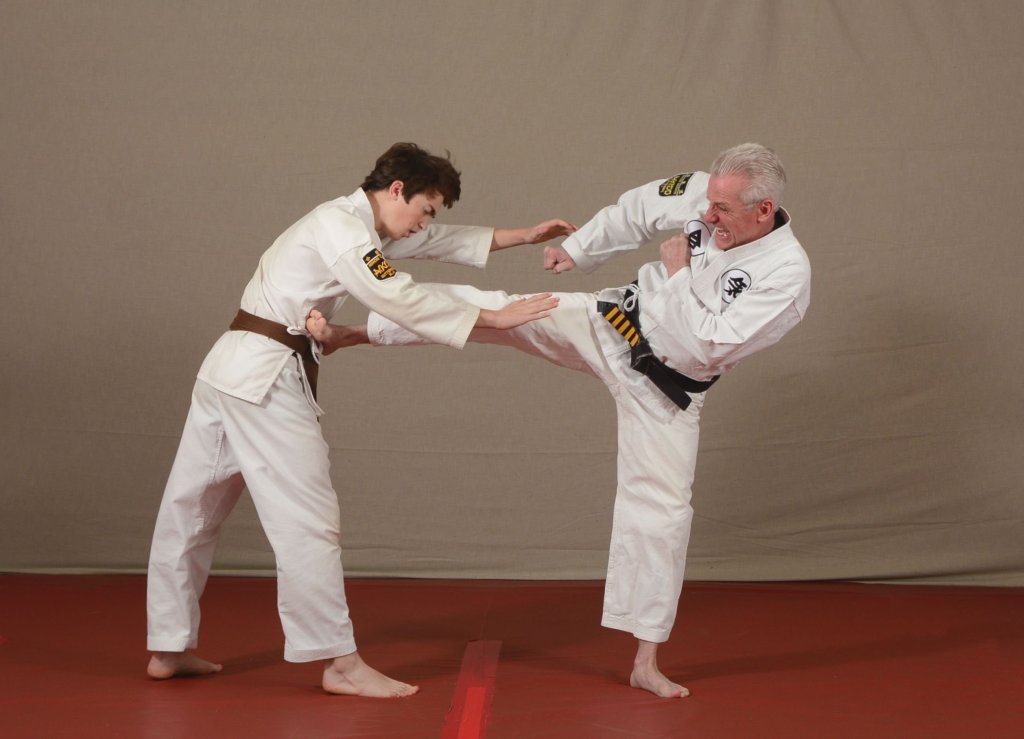
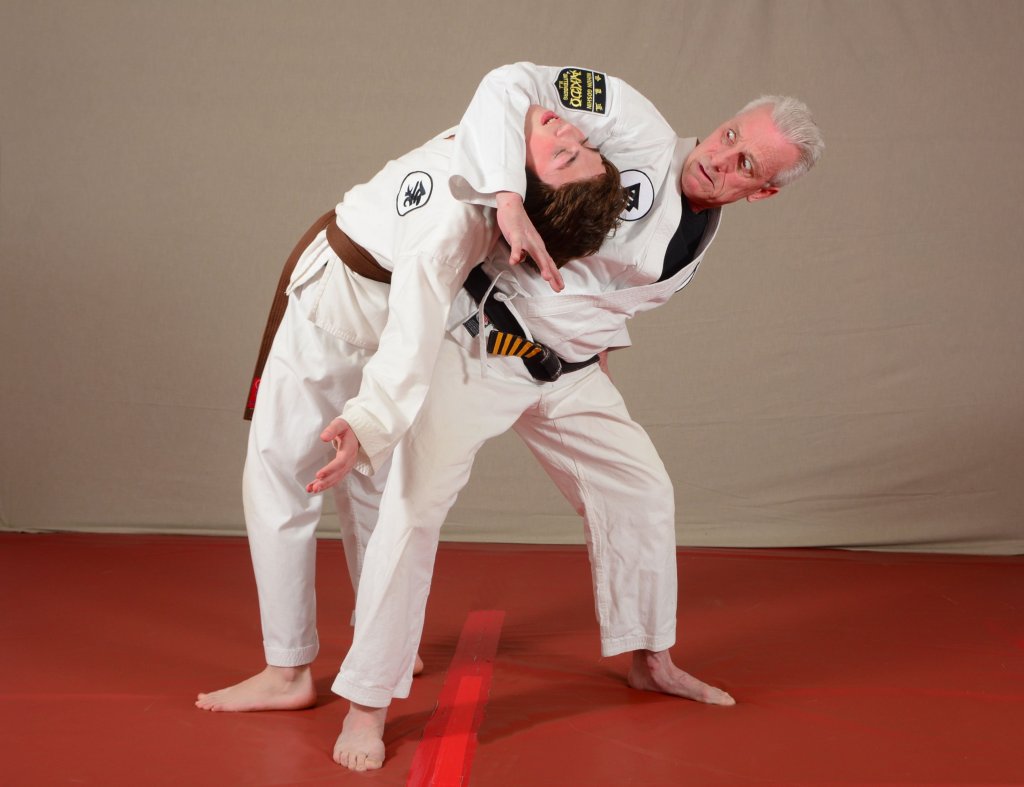
“Dynamic Aikido” is a title I came up with. It is something that is explosive. When I do videos, I very rarely do takes. 99.9% of the techniques are done on the spot with no redos. The uke being thrown who complements the technique and me doing the technique as cleanly as I think it is supposed to be done makes it look dynamic.
Have you ever studied traditional Aikido? What are the significant differences?
Yes. I find that Nihon Goshin focuses more on combative situations for personal self-defense and deals with reality and with the time or era we are in.
Some Aikidoists outside of NGA suggest that Morihei Ueshiba is not important to this art. Where does he fit in?
I take Morihei Ueshiba very seriously because the focus of Aikido is such a main part of NGA, although we do a lot of Aiki-Jujitsu. If one could learn how to focus the philosophy of hombu Aikido and NGA, one would then understand the purpose of the word “Aikido” and understand NGA as an art complementing Ueshiba’s art. If the black belts in this dojo would understand that what they are doing 75% of the time is combat Aiki-Jujitsu, and if they could slow down and understand the Aiki philosophy in every technique, then their techniques would get better. They wouldn’t be so combative — they wouldn’t have to be. The techniques would be effortless. If you find you have to punch and kick and do all that … that was not Morita’s plan for NGA. His plan was to incorporate the philosophies of Aikido but in a combative form. Hombu is pure Aikido with the focus on understanding where your ki and your center is. NGA is the same, but does so in a combative way. Not too many people understand that. If one could become centered instead of going out on the mat and going through the motions, and if one can really feel the technique and feel what uke wants them to do, then they are beginning to learn.
Critics of NGA say that it is more like Aiki-Jujitsu than Aikido. Seeing as how you have a degree in Daito-ryu Aiki-Jujitsu, how would you answer these critics?
It does focus more on the “jitsu” or combative style, but NGA is like the tip of an iceberg; a lot of it is just below the surface of the water unseen and the unseen part is the Aikido part. Many of the techniques are done creating the same reaction in uke. The philosophy in NGA, which sometimes takes more years to understand than just being a black belt, definitely focuses on harmonizing with uke’s energy, and that is what hombu Aikido is all about.
Master Morita chose techniques that seem to work best from various arts. How much of this goes on today?
He created a system that people could understand and that he thought worked the best. Other people may not have thought they worked, but thousands of styles have come and gone and this style has survived for over 50 years. There’s nothing wrong with creating a new style like Morita did as long as you can get people to follow it. It’s been done for thousands of years.
What do you think of NGA students who get their black belts and go out to formulate their own styles in this spirit?
NGA students who just get their black belts and do this don’t realize that they are still white belts. Your beginning of training is when you get your shodan. You’ve just filled your toy box and are just starting to play with your toys.
How have you used Aikido in everyday life?
I use Aikido everyday in life. It has taught me how to go with the flow and to learn how to be humble and to respect everybody as they are.
How does Aikido help you to “go with the flow”?
My focus gets better and better the more I’m training. I couldn’t imagine not doing Aikido every day, whether it’s physically doing it or mentally doing it.
I treat everybody as one. I don’t treat a black belt any differently than a white belt. There’s a difference between the two, but I treat both as human beings. Spiritually, Aikido has helped me through many obstacles. The spiritual part of Aikido is to learn to become one within yourself through mushin, which means learning how to clear your mind and get focused. It has helped me learn how to get rid of the inner poisons and the outer interferences.
December 1999

 Aikido School of Self-Defense